


In 2025, fashion’s relationship with cultural heritage is undergoing a profound shift. No longer limited to surface-level inspiration or seasonal “ethnic” moments, we are witnessing a deeper reckoning, a call to acknowledge, respect, and reframe the histories that shape how we dress. Across continents, designers and wearers alike are reaching into their roots, drawing from ancestral textiles, rituals, and silhouettes to write new style codes that are unapologetically local and globally relevant.
Whether through the revival of craft techniques, the remixing of diaspora wardrobes, or the use of digital tools to archive disappearing traditions, what unites these stories is intention. In reclaiming heritage, a new generation is reshaping what global fashion means and who gets to define it.
Cultural Threads is a new editorial series exploring how cultural memory is reshaped through fashion from South Asia to Japan, Eastern Europe, China and beyond, each offering a lens into how cultural memory is being rewoven into contemporary fashion. These essays go beyond nostalgia, they center agency. They explore the rise of hybrid identities, the friction between appropriation and authorship, and the aesthetics that bridge heritage with innovation.
Global Desi – South Asia Fashion
Fashioning identity in a globalised era
The evolution of South Asian diaspora fashion has been deeply shaped by waves of cultural and socio-economic transformation. In the 1990s, India’s economic liberalisation opened the floodgates to Western brands, media, and aspirational lifestyles. With MTV playing in living rooms and malls filled with fast fashion, a new generation across the subcontinent began to reimagine style through the lens of global pop culture. The effects were far-reaching not only in India, but across diaspora communities in Pakistan, Bangladesh, Sri Lanka, and beyond where younger generations navigated complex intersections of heritage and modernity.
For many second and third generation immigrants ABCDs₂ (American-Born Confused Desis), NRIs₃ (Non Resident Indians), British Asians, and others fashion became more than appearance; it was a tool to blend, negotiate, and express dual identities. Globalisation intensified this dialogue. While the early 2000s saw a surge of Western mimicry, from low-rise jeans to Abercrombie aesthetics, post 2020 fashion has witnessed a marked shift. A renewed appreciation for South Asian craftsmanship, sustainability, and cultural authenticity has taken hold driven in large part by Gen Z’s desire for individuality, meaning, and representation in what they wear.
The modern South Asian wardrobe
In 2025, South Asian fashion embodies a dynamic tension thriving on contrast, contradiction, and creative fusion. There’s a renewed embrace of traditional garments like handloom saris, block-printed salwar suits, lehengas, and lungis not only reserved for ceremonies, but increasingly integrated into everyday wardrobes. While they retain cultural significance during weddings and festivals, they now coexist with global fashion staples from brands like Zara, Mango, and Uniqlo. This seamless blend of heritage textiles and high-street fashion has become a hallmark of modern South Asian style.
Rather than revisiting tradition, today’s South Asian fashion redefines it. Across the region and its diaspora₄, Gen Z is reshaping how cultural heritage lives in the now. Embroideries like chikankari, zardozi, and gota patti extend beyond occasionwear, finding space on bombers, tailored blazers, and contemporary co-ords. Juttis are styled with cargo pants, bandhani and brocade feature at casual gatherings, and lehengas are paired with platform sneakers. Together, these expressions reflect a generation grounded in its lineage yet unafraid to reimagine it.
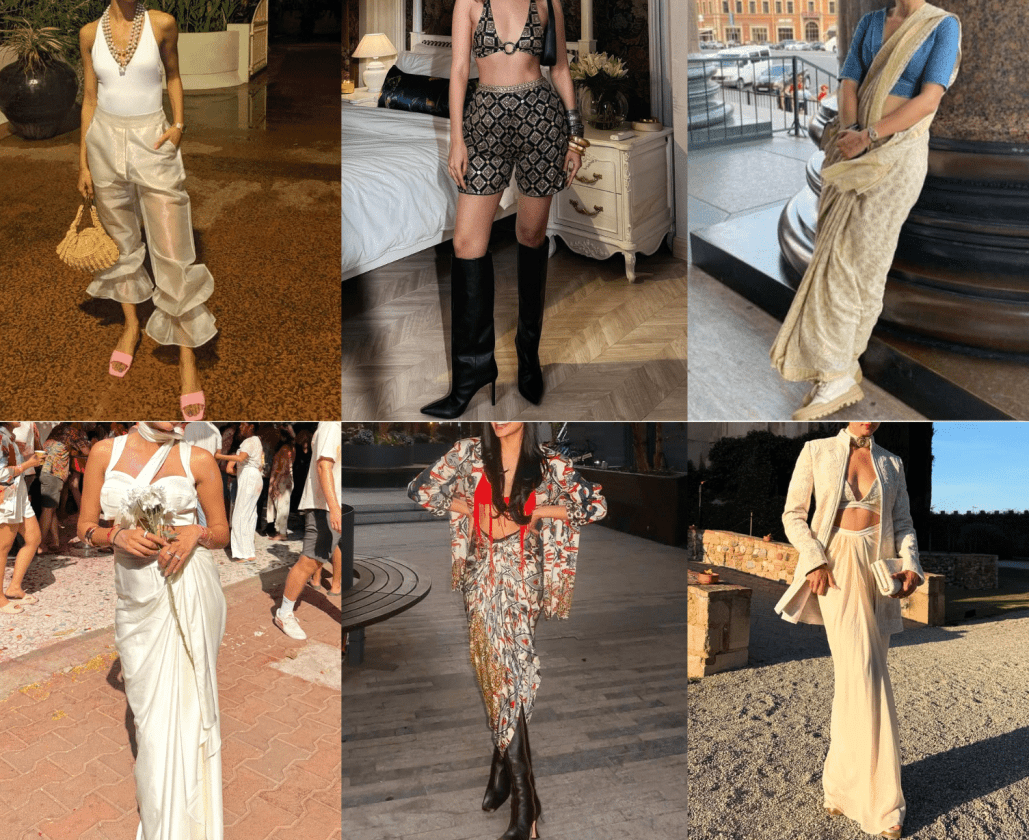
Meanwhile #Indowestern₅ has surpassed 205 million views on TikTok, across 29,600+ videos signalling a powerful wave of digital engagement. On Instagram, over 3.2 million posts under #desifashion points to a vibrant, niche community invested in reworking cultural style. According to Google Trends forecasts, interest in hybrid fashion continues to climb, with hashtags like #Indowestern reflects a growing desire for styling that is both deliberate and expressive.
Gender fluidity and diaspora expression as a new asian fashion trend
At the same time, we’re witnessing a new wave of gender-inclusive formalwear from bandhgalas and Nehru jackets to gunyu cholo and kurta sets reimagined through queer, nonbinary, and diaspora lenses. These garments are deliberate expressions of identity rooted in heritage, shaped by context, and styled with intention.
The rise of conscious design
Purpose-driven design is also gaining momentum. Young designers are using fashion to support artisans, advocate for fair trade, and prioritise circularity proving that innovation and tradition are not mutually exclusive.
A new narrative is taking shape where craftsmanship and technology converge, and personal heritage aligns with algorithm-led aesthetics highlighting hybrid identity, cultural pride, and bold experimentation.
This emerging generation is redefining what South Asian fashion represents. With a global outlook and a bold sense of expression, they honour tradition while confidently expanding its boundaries – challenging the conventional fashion trend cycle by blending heritage with innovation.
South Asian influence on the global runway
As South Asian fashion trends rise globally, their presence is increasingly shaping silhouettes, surface details and styling codes across luxury collections. From kurta inspired tunics and bandgalas to handcrafted embroidery and South Asian accessories, the region’s rich design language continues to inspire a wide array of brands.
For instance, Prada’s SS26 menswear collection featured footwear style reminiscent of Kolhapuri craftsmanship, while designers like Dries Van Noten and Emporio Armani have long explored textile traditions and tailoring rooted in South Asia. These creative choices speak to the global appeal of South Asian Visual culture and its capacity to influence contemporary fashion in fresh, resonant ways.
At the same time, leading brands are also building bridges through collaborative storytelling. Louis Vuitton’s SS26 menswear show, directed by Pharell Williams, brought Indian architecture and material philosophy to the runway in collaboration with Bijoy Jain and Studio Mumbai. Dior’s Fall 2023 show spotlighted Indian artisanship through a partnership with the Chanakya School of Craft, while Nike’s Bandhani capsule, co-created with NorBlack NorWhite, explored heritage through a contemporary, global lens.

As Gen Z and Gen Alpha seek meaningful engagement with the cultures behind their clothes, these examples demonstrate the value of thoughtful collaboration and cultural storytelling adding depth and relevance to fashion’s global narrative.
Redefining global style, from South Asia fashion trends outward
South Asian fashion in 2025 represents a decisive evolution more than a trend, it is a cultural and creative transformation. Rather than mirroring Western norms or relying solely on tradition, it builds a distinct space of its own. This movement is led by a rising generation of designers, wearers, and cultural thinkers who view identity as something to be shaped with intention, rooted in heritage yet responsive to the present.
As fashion trend forecasters, it is essential to go beyond surface aesthetics and immerse ourselves in cultural context. The most influential trends resonate deeply; they evoke emotion, preserve memory, and reflect intentional reclamation. In this new landscape, fashion serves as both mirror and map: reflecting where we come from, and shaping where we are headed.

Heuritech’s 2026 trend forecast highlights the defining codes of South Asian-inspired hybrid fashion: a grounded palette led by tawny brown (37%), burnt orange (34%), and mocha (27%), paired with tactile fabrics like cotton twill (100%), linen (19%), and chiffon (14%). Accessories ranging from heirloom-inspired jhumkas to embellished juttis and anklets play a crucial role in blending cultural memory with contemporary styling. This aesthetic is championed by pioneering brands such as Kārtik Research, Dhruv Kapoor, and Anamika Khanna (India); Generation and Élan (Pakistan); and Amilani Perera and Amesh Wijesekera (Sri Lanka). In Bangladesh and Nepal, emerging designers are reclaiming artisanal techniques like jamdani weaving, kantha embroidery, and natural dyeing positioning fashion as both narrative and empowerment. With reimagined silhouettes, fluid layers, and expressive detail, this visual starter pack reflects the transnational style preferences shaping Gen Z and Gen Alpha wardrobes across both local and global spheres.
Glossary of Terms
- Desi: A casual term for people, cultures, or products from the Indian subcontinent (India, Pakistan, Bangladesh, Sri Lanka, Nepal), often used by diaspora communities to express shared heritage and identity.
- ABCD (American-Born Confused Desi): A humorous term for U.S.-born South Asians, highlighting the cultural tension between Western upbringing and South Asian traditions.
- NRI (Non-Resident Indian): An Indian citizen living abroad for work, study, or other reasons, typically maintaining strong cultural and emotional ties to India.
- Diaspora Fashion: A style shaped by migrant communities, blending heritage with global influences to express hybrid identity, cultural pride, and personal storytelling.
- Indo-Western: A fusion style combining Indian silhouettes (like saris or kurtas) with Western elements (like blazers or sneakers), reflecting multicultural identities.
Did you miss our previous Cultural Threads Series exploring the intersection of cultures and fashion? Discover our journey through traditional Chinese fashion or dive into the Japandi fashion concept, where centuries-old Japanese heritage meets the simplicity and functionality of Scandinavian design.


