As our Cultural Threads series continue to trace the ways tradition and heritage shape modern style, we turn our gaze to China – a nation where millennia-old craftsmanship meets a bold new creative energy. What began as a niche cultural movement has surged into a powerful aesthetic and commercial force, redefining what it means to be both modern and deeply rooted in tradition.
Guochao: Tradition reimagined
The concept of heritage fashion is nothing new in China, a country with millennia of rich cultural traditions and craftsmanship. In recent years, however, it has taken on renewed significance through the rise of Guochao, or the “national trend.” Since gaining mainstream traction in 2021, Guochao has evolved from a niche movement into a driving force in culture, both domestically and internationally.
Gen Z consumers are embracing homegrown products that celebrate Chinese heritage with a modern twist. Driven by a strong sense of national pride and cultural identity, this generation is reshaping consumer preferences, placing value not only on aesthetics and quality, but also on authenticity and origin.
In the fashion industry, the rise of “China Chic” embodies this fusion of cultural heritage and contemporary style. This movement reinterprets traditional Chinese aesthetics, such as classical motifs, historical silhouettes, and artisanal craftsmanship, through a modern design lens.
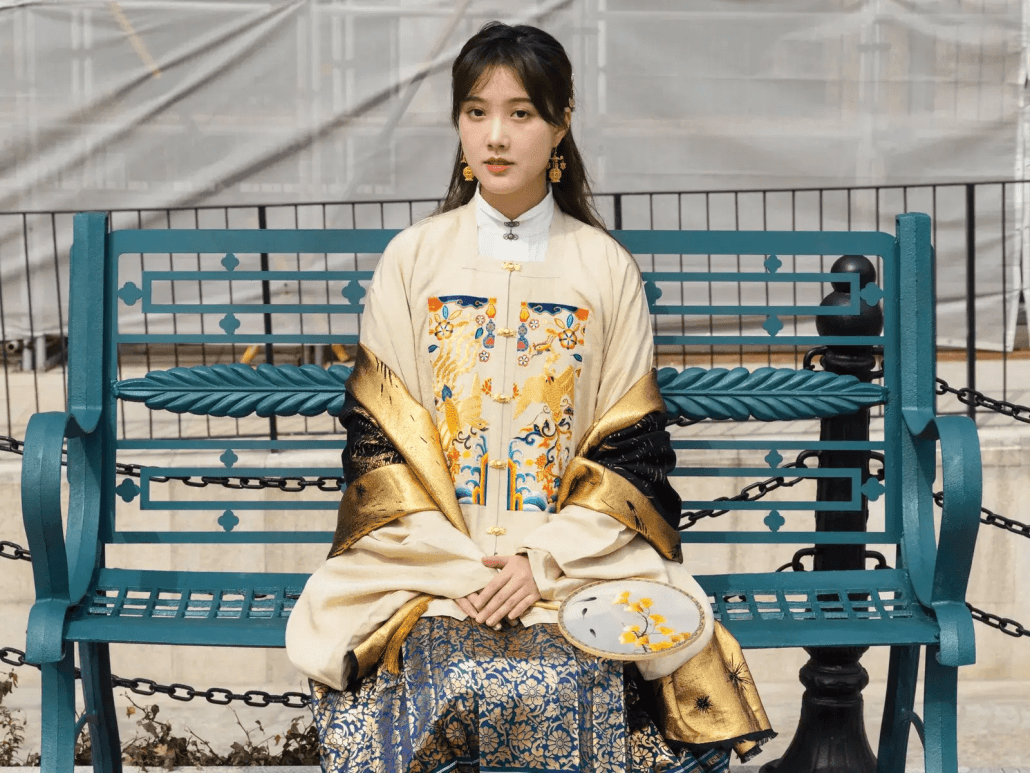
Its expression is versatile, ranging from full Hanfu-inspired ensembles that honor historical dress to minimalist garments that subtly incorporate traditional patterns, colors, or symbolism within Western silhouettes. This blend of old and new reflects a cultural confidence that continues to grow among younger generations. For today’s consumers, especially Gen Z, the phrase “Made in China” no longer evokes purely industrial production. Instead, it has become a symbol of authenticity, innovation, and a bold reclaiming of cultural narrative through design.

Image credit: Xeoxo
China Chic: The rise of Hanfu among Gen Z
Much like the global fascination with Western period styles, Chinese period dramas have played a significant role in reigniting interest in traditional clothing, particularly Hanfu. Acclaimed series like The Imperial Doctress (set during the Ming dynasty) and Serenade of Peaceful Joy (set in the Song dynasty) have sparked widespread enthusiasm for these historical styles.
Hanfu refers to the traditional clothing worn during several key dynasties, particularly the Tang, Song, and Ming periods. It stands apart from costumes used in cosplay or role-playing by emphasizing historical accuracy and cultural integrity. This distinction reflects a movement among younger Chinese generations who are actively reconnecting with their heritage.
While Hanfu styles evolved across different eras, they are generally characterized by distinctive features such as cross-collar robes (jiaoling youren), wide sleeves, sashes instead of buttons, and layered garments. These timeless elements have become a rich source of inspiration for contemporary fashion brands, seamlessly blending tradition with modern design.
Hanfu’s popularity has seen significant growth, with enthusiasts, particularly among Gen Z, having nearly doubled from 3.56 million in 2019 to over 6 million in 2020 (Vogue, 2021). This revival has been largely driven by social media, where the hashtag #Hanfu has amassed 4.89 billion views on Weibo, more than 47.7 billion views on Douyin (China’s TikTok), and over 407k posts on Instagram.
In Shanghai, wearing Hanfu has become increasingly normalized, often paired with modern makeup and contemporary hairstyles to create a fresh and stylish look. The rise in Hanfu’s popularity is also driven by influential figures like Shanghai-based fashion influencer Shiyin, who seamlessly blends traditional attire with modern trends. This cultural phenomenon is part of the broader “China Chic” movement, where younger consumers proudly embrace domestic brands and their heritage. The trend has further evolved into Modernized Hanfu, a contemporary reinterpretation that adapts classic designs for today’s fashion landscape.
Shiyin, Image credit: Peng Ke for Vogue
Neo-Chinese Style: A modern cultural expression
The desire to reconnect with heritage and cultural roots extends well beyond China’s borders, particularly within the global Chinese diaspora, who often navigate bicultural identities blending traditional and contemporary, local and international influences. Within diaspora communities, a dynamic interplay of influences unfolds as individuals creatively merge Western elements with traditional motifs. Many honor their heritage by embracing contemporary designers, such as AO Yes, Ms MIN, Samuel Gui Yang, and Vivienne Tam, who thoughtfully weave cultural elements into their creations. Appreciation for Chinese culture transcends nationality, language, and background, resonating universally and enabling people from diverse origins to engage deeply and meaningfully with its rich traditions.
To celebrate and promote traditional Chinese culture, the third day of the third lunar month has been officially designated as the Chinese Costume Festival. While Hanfu remains a prominent source of inspiration, it is by no means the only one. Timeless pieces such as the qipao (cheongsam) and the Tang suit also continue to inspire fashion today. Elements like the frog closure, a distinctive ornamental buttoning style, have become iconic accents incorporated into various modern designs, serving as subtle nods to the culture.
In 2025, fashion has become a means for cultural self-expression, especially among second-generation Chinese and those living abroad. For many, clothing offers more than aesthetic appeal; it serves as a meaningful way to reconnect with their heritage and seamlessly weave tradition into everyday life. This resurgence is vividly reflected in the growing fascination with “New Chinese Style”, a trend flourishing across social media platforms: the hashtag #chinesestyle has over 544k posts on Instagram, #newchinesestyle surpasses 1,000 posts, and the Chinese hashtag #新中式 (Neo-Chinese Style) nears 40k posts.
At the core of this movement is the Neo-Chinese Fashion trend, which redefines traditional Chinese aesthetics through a contemporary lens. Rather than simply reviving classical styles, Neo-Chinese fashion blends timeless motifs, materials, and silhouettes with innovative design and modern techniques. This dynamic fusion both honors cultural roots and pushes creative boundaries, reflecting a generation eager to express their identity on their own terms.

Image credit (from left to right): AO Yes, Samuel Gui Yang, Ms MIN, Vivienne Tam
Looking Ahead: identity in reinvention
Shanghai has firmly established itself as a global fashion capital alongside New York, Paris, Milan, and London, emerging as a vibrant hub for innovative Chinese design. Leading this movement are pioneering brands like AO Yes, Raydots, Yayi, and WMWM. These designers create immersive sensory experiences that seamlessly blend contemporary aesthetics with Eastern influences. From gender-fluid reinterpretations of traditional garments like the Zhongshan suit, using sheer fabrics and bold proportions, to explorations of multiculturalism and personal heritage through traditional materials such as rice paper and culturally significant motifs, their collections emphasize texture, layering, and a delicate balance between strength and subtlety. Cultural references are woven naturally into their designs, giving each piece a distinct narrative.
Across the board, designers emphasize thoughtful adaptation rather than mere replication; Chinese elements are reimagined to capture the spirit and essence of tradition while breathing new life into them. Looking ahead, Neo-Chinese fashion is set to further explore themes of identity, gender fluidity, urban femininity, and complex cultural narratives. These brands continue to push creative boundaries, expanding the conversation about what it means to embody a modern Chinese aesthetic.
On the community front, initiatives like Labelhood, organizers of Shanghai Fashion Week and champions of emerging designers play a crucial role in fostering this creative ecosystem. Drawing inspiration from historical references, natural motifs, multicultural experiences, and innovative fabrics, Neo-Chinese style is evolving into a distinctive and influential force on the global fashion stage.
Bridging cultures
For brands aiming to connect with the Overseas Chinese market, crafting marketing strategies that genuinely resonate with the multicultural identities of this audience is essential. This means going beyond superficial references to develop campaigns and products rooted in a deep understanding of both traditional Chinese culture and its modern reinterpretations. When done thoughtfully, incorporating elements of Chinese heritage can strengthen a brand’s identity and create meaningful engagement, especially when tied to specific occasions like the Chinese New Year.
However, it is crucial that brands approach the overseas Chinese market with sensitivity, respect, and cultural awareness to ensure their efforts avoid cultural appropriation and instead serve as genuine homages. Successful integration of cultural elements often stems from authentic collaborations with Chinese designers, creators, or local brands. Adidas provides a prime example: its Adidas Originals x Edison Chen collection, launched globally in January, celebrates the Chinese New Year with a range of apparel and accessories, from socks to sports jackets. This partnership showcases how well-executed collaborations can bridge cultural divides while appealing to a global audience.
To effectively win over luxury consumers within the Overseas Chinese community, brands should focus on connecting through their multicultural identities and cultivating genuine relationships. Collaborations with overseas Chinese creators who bring authentic perspectives on luxury and lifestyle are key. Additionally, bespoke experiences that blend Eastern and Western influences help deepen consumer engagement.
Ultimately, the most successful strategies are those that balance cultural insights with authenticity, fostering respectful homage rather than appropriation, and building lasting connections with this dynamic and influential market.
The embrace of heritage reflects a profound cultural shift marked by a renewed appreciation for China’s enduring culture and traditions.
Did you miss our other editions of Cultural Threads series? Dive into our exploration of South Asian fashion and discover how tradition is being reimagined across India, Pakistan, Sri Lanka, Bangladesh, and Nepal. Or learn more about Japandi style fashion, connecting Japanese centuries-old traditions with Scandinavian hygge concept.
Sources
- ‘Guochao’ Trend May Disrupt Western Luxury Brands’ Dominance In China
- Meet Shiyin, the Fashion Influencer Shaping China’s Hanfu Style Revival
- The influence of Overseas Chinese on the global luxury landscape
- The 2022 guochao playbook-2022 Daxue Consulting
- Neo-Chinese Fashionscape: Where Modernity Meets Heritage
- An Introduction to Traditional Chinese Clothing