Generation X is often described as the “middle child” of generational cohorts, quietly influential, resilient, and bridging the gap between tradition and innovation. Understanding what truly defines Gen X means unlocking a wealth of actionable insights for brands, marketers, and workplace leaders. This generation stands out for its independence, adaptability, and balanced approach to change, traits that make them a stabilizing force in today’s fast-evolving world.
Generation X holds a unique, if understated, place in the social and economic landscape. While the spotlight often falls on boomers, millennials, or Gen Z, Xers quietly drive business decisions, hold significant purchasing power, and shape both workplace culture and consumer behavior.
Today’s Gen Xers are in their mid-40s to late 50s, balancing careers, raising children, supporting aging parents, and adapting to rapid technological shifts.
Why focus on Gen X now? Their role as “connectors” across generations gives them outsized influence, especially as companies strive to understand the values and motivations behind different age groups.
For brands and employers, grasping Gen X’s core characteristics is essential to designing products, experiences, and strategies that resonate in 2025 and beyond.
Who Is Generation X?
Generation X, often called the MTV Generation or the Baby Bust, refers to people born between 1965 and 1980. They grew up in a period of significant social and technological change marked by rising divorce rates, more dual-income and single-parent households, and the emergence of personal computers and cable TV.
Many Gen Xers are known as “latchkey kids”, coming home from school to empty houses, learning early to be independent and resourceful. Culturally, they are shaped by everything from the end of the Cold War and the birth of hip-hop to the explosion of grunge music and iconic 90s fashion. Positioned between the larger baby boomer and millennial generations, Xers sometimes get overlooked in generational analysis. Yet, they bring a distinctive mix of self-reliance, critical thinking, and adaptability, serving as a bridge between analog and digital worlds.
Today, Gen X forms the backbone of organizations, balancing leadership roles and hands-on expertise, and providing a vital link between older and younger employees.

Gen X in Fashion : Shopping Behavior in 2025
Generation X approaches fashion shopping with a practical, research-driven mindset. Their behavior reflects a balance of value-consciousness, digital savviness, and planning ahead for seasonal and key life events. For fashion brands, understanding these patterns is essential to building strategies that resonate with this influential cohort.
Value and Quality First
For Gen X, value and reliability outweigh hype. This generation is highly selective, preferring to invest in pieces that last rather than chase fleeting trends.
According to Wunderkind, 59% of Gen X shoppers prioritize exclusive discounts and rewards, compared to 51% of Millennials. This makes them the most deal-driven segment, but not in a purely price-sensitive way. Discounts act as validation for a purchase they were already considering, especially when paired with consistent product quality.
Impulse buying is rare: Gen Xers take time to research products, compare across channels, and read customer reviews before making a decision. They expect transparency around sizing, materials, and brand values.
For brands, the takeaway is clear:
- Build robust loyalty programs that provide tangible, long-term benefits.
- Focus on clear, honest communication rather than flashy marketing tactics.
- Deliver consistent quality to retain their trust — once you lose it, it’s hard to win back.
Omni-Channel and Tech Adoption
Gen X blends online research with in-store shopping, embodying a truly omni-channel approach.
For example, 73% of Gen X consumers prefer to purchase beauty and personal care products in-store, even if they researched them online first. This reflects a desire for tactile experiences and real-time assistance before committing to a purchase.
While not digital natives, Gen X has become highly comfortable with technology. Smartwatch ownership increased by 34% between 2021 and 2024, indicating a growing engagement with connected devices and wearable technology.
The key for brands is to simplify, not overcomplicate, the digital journey:
- Ensure a seamless, consistent experience across websites, apps, and physical stores.
- Use tech to save time, a top priority for this generation, rather than adding unnecessary steps.
- Offer clear inventory visibility, flexible pickup options, and straightforward returns.

Seasonal & Planned Fashion Shopping
Gen X is a planner. Unlike younger consumers who browse frequently and make impulsive purchases, this generation tends to schedule purchases around key seasons and life events.
Strong shopping peaks align with:
- Spring/Summer → travel, leisurewear, casual looks, and vacation wardrobes.
- Fall/Winter → premium pieces, outerwear, and gifting periods.
For fashion brands, this means timing collections and campaigns carefully to match these patterns.
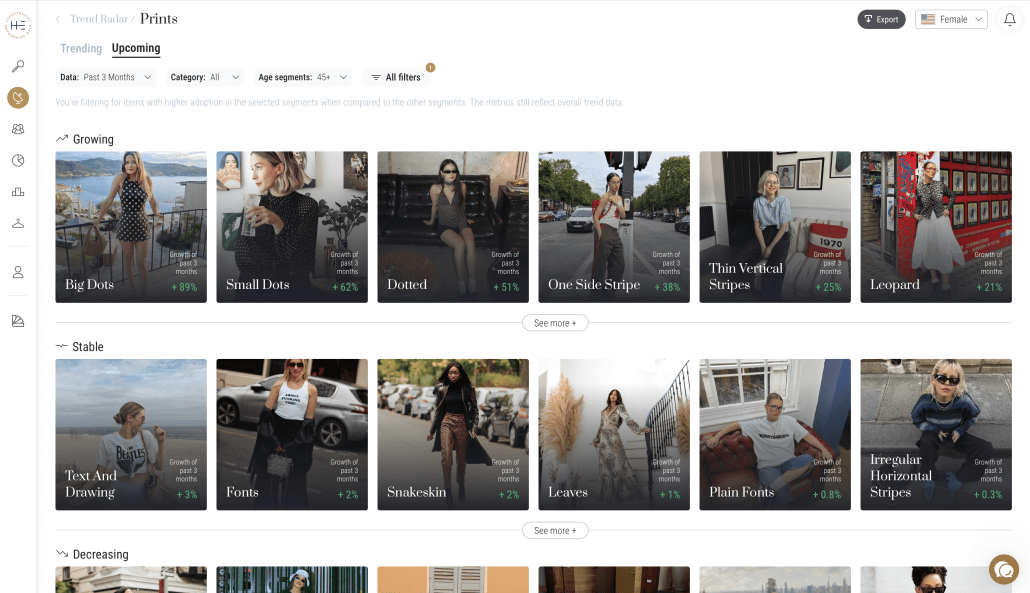
Using Heuritech’s trend forecasting data, brands can anticipate which pieces of clothing, prints, colors, textiles will gain traction for each season. For instance, for women aged 45+ in the US, Heuritech’s analysis in past 3 months highlights the domination of neutral and classic hues, with brown tops (+14%), black pants (+4%), and gray tops (+3%) leading color growth, suggesting a preference for versatile staples. In terms of shapes, midi skirts (+17%), blouses (+13%), and hip-length outerwear (+11%) stand out, reflecting a polished yet practical aesthetic. Prints show renewed energy through printed dresses (+17%), striped tops (+12%), and printed tops (+11%), combining sophistication with subtle expressiveness.
Data from Heuritech’s Market Trends Analysis Platform for Women 45+ in the US for the past 3 months
On the fabric side, the popularity of jersey and cotton jersey tops, along with denim pants, underlines a consistent demand for comfort-driven materials. Altogether, the data points to a mature, refined wardrobe shift centered on wearability, effortless style, and understated confidence.
Meanwhile, for men aged 45+ in the US, Heuritech’s analysis of massive trends over the past three months reveals a refined, classic approach to modern dressing, emphasizing structure and sophistication. Classic-collar tops (+12%), flat boots (+10%), and formal shirts (+8%) lead the shape trends, pointing to a resurgence of tailored, versatile essentials. Tailored pants (+7%), jackets (+6%), and long-sleeve outerwear (+6%) further reinforce this polished aesthetic. On the color front, timeless neutrals such as black pants (+4%) and gray outerwear (+2%) show steady growth, while brighter tones and whites slightly decline, underscoring a preference for subtle elegance. Printed tops (+1%) remain marginal, suggesting minimalism continues to dominate over bold expression. Overall, the data reflects a lean toward enduring wardrobe staples and clean silhouettes, marrying practicality with understated refinement.

Data from Heuritech’s Market Trends Analysis Platform for Men 45+ in the US for the past 3 months
Gen X and Fashion Style Trends
In 2025, Generation X influences fashion through a mix of timelessness, nostalgia, and authenticity. Unlike younger consumers driven by constant novelty, Gen X prefers well-crafted, versatile pieces they can wear for years. They focus on quality and durability over quantity, making them naturally drawn to sustainable brands — provided those brands can prove their ethics and avoid greenwashing. Casual chic staples, premium sneakers, and heritage denim are at the core of their wardrobes, reflecting a balance of style and practicality.
Many of today’s top aesthetics, such as 90s minimalism and Y2K-inspired looks, were pioneered by Gen X during their formative years. Their legacy continues to shape trends like grunge, retro sportswear, and elevated basics, all of which are resurging in 2025. According to Heuritech’s trend forecasting data, themes like Japandi, Fisherman Fall, 70’s Resort and Sigma Luxury are growing across age groups, giving brands the chance to connect past and present through iconic designs and archival revivals. For brands, the key opportunity lies in bridging Gen X and Gen Z. These two generations share a love for authentic storytelling and heritage brands, even if their buying power differs. Gen Z often enters through accessible products like fragrances or accessories, while Gen X invests in premium pieces and high-value items. Strategic collections and campaigns that speak to both audiences, like Apple pairing with Pedro Pascal, can drive growth across segments. With the right balance of nostalgia, quality, and modernity, brands can build lasting connections with both generations.

Apple x Pedro Pascal Ad
Gen X blends nostalgia with practicality, valuing quality, timeless design, and authentic sustainability. With strong spending power, they influence both premium and mainstream markets. For brands, bridging Gen X and Gen Z through shared aesthetics and storytelling creates growth opportunities in 2025 and builds lasting, cross-generational loyalty. Technology providers, like Heuritech, help brands decode these generational nuances through AI-powered trend forecasting, revealing how audiences like Gen X express their values in fashion, and how these insights can shape smarter, more inclusive strategies.
Sources
- Accio – Gen X Shopping Trends (2025)
- Wunderkind – 2025 Fashion Shopping Report
- GWI – Gen X Characteristics